

sharelatex, which is also the predecessor of Overleaf.
The dev environment already runs Mongo Express next to Mongo (see setup-develop-tools.md). Open http://localhost:8081/ and log in with admin:pass.
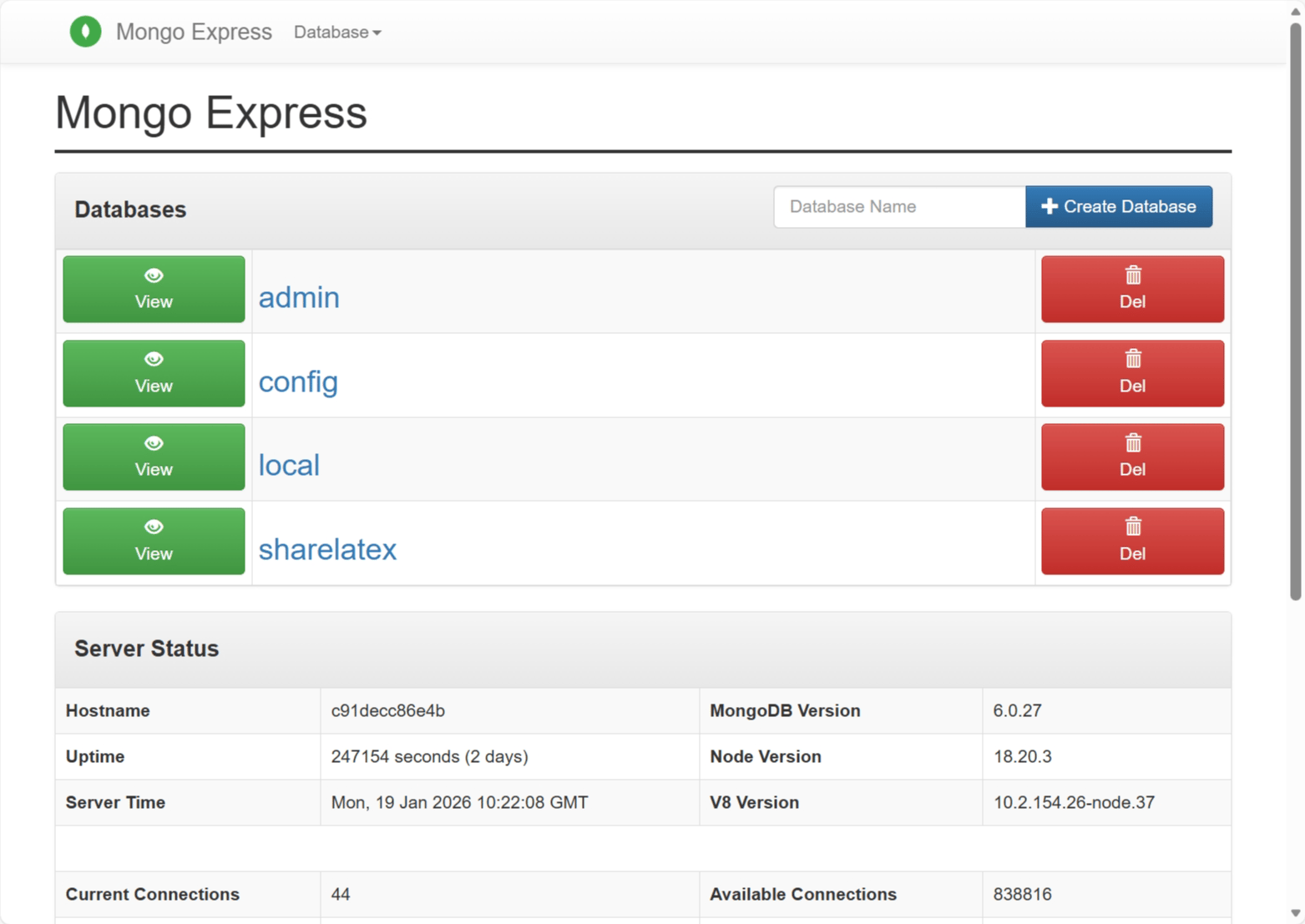
develop directory:
How the Pages Are Written
- Each page lists the fields that the code writes, with their type, meaning and the line of code that shows it: a Mongoose schema line, or the place that writes the field. Fields that only a migration, a script or one of the web modules writes say so.
- Many collections have no Mongoose schema: the services write them with the MongoDB driver.
- Indexes are only created by the migrations in
tools/migrations/. CE runs those taggedserver-ceat every start (server-ce/init_scripts/900_run_web_migrations.sh); MongooseautoIndexis off (services/web/app/src/infrastructure/Mongoose.mjs:7). The index tables only list what a CE instance ends up with. - The text of the docs is in Mongo, but other content is not. File content is stored as blobs and history as chunks in the history-v1 buckets (local folders, or S3 / RustFS); open docs live in Redis until document-updater flushes them.
Collections
Project and content:
History:
Sharing, login and deletion:
Integrations and templates:
Dashboard, logs and the rest:
A CE database has more collections than these. Many are created empty by their index migrations and are only used on overleaf.com. For example, nothing in CE or our modules writes
splittests, samlLogs, notificationsPreferences, onboardingDataCollection or userfeatureusages in normal use, so they have no page.